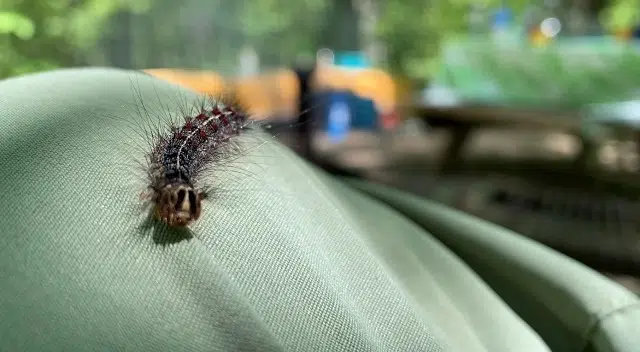
The Nature Conservancy of Canada (NCC) is alerting us to the dangers of the Gypsy Moth.
Its infestations are ravaging trees in many communities across Ontario.
The NCC says you can follow the insect’s advance on the iNaturalist map, which shows where some people have reported their findings. Sharing this information helps municipalities know its range and helps control the spread.
The European Gypsy Moth was first detected in Canada in 1969, and its appearance in cyclical – the moth goes through a population boom and crash cycle every 10 to 12 years, and experts are optimistic the crash will come in 2022.
Mature LDD caterpillars are about 50 millimetres long, hairy and dark-coloured. They feed on the leaves of over 400 plants and especially love deciduous trees, like sugar maples, oaks, elm and birch.
They resemble domestic species like the tent caterpillar.
It’s important that you don’t handle the caterpillars with your bare hands as they cause a rash.
Once they morph into moths they will be either brown if they are male or white if female.
Female moths are flightless and lay eggs on tree bark, branches or other sheltered places like rock piles, piles of logs, lawn furniture, or recreational equipment.
Scrape off any egg masses you see from August to the following spring and immerse them in a bucket of soapy water.
Let them soak for a couple of days before disposing.


